
"Ottoman Empire"
400 article(s) found

What are the main nutrients of coffee beans?
Coffee was planted in large numbers by Arabs in the 12th and 3rd centuries, and the world's first coffee shop was born in Damascus in the Middle East in the 16th century (1530). In just a few years, from the ancient Constantinople to the Caucasus, from the Persian Gulf to Budapest, and more than 200 cities throughout the empire had different numbers of coffee shops, and those cities were connected through the sand.

Introduction to the flavor and taste of the sweet Ethiopian Yega Snow Aduoda Coffee
During the early invasion of western colonialism, Portugal and the Ottoman Empire invaded one after another in the 16th century. British troops invaded Ethiopia in 1867 and Sudanese Mahdi troops invaded in 1887. In 1889, Mennelik II became emperor, unified the country, established the capital Addis Ababa, and established the territory of modern Ethiopia. In 1890, Italy invaded, squeezed out British power and announced Ethiopia.

Formula of weight loss ratio in different degrees of coffee roasting
Coffee roasting different degrees of weightlessness ratio formula moderate American roasting. If it is a little darker than medium, it may be a city, also known as normal, brown: make the color as dark as possible without oil. Viennese American term meaning slightly darker than medium baking. This baking has dark brown spots and a little oil on the surface. Also known as mild France

Ethiopian Yegashefi Aduo Coffee with rich body Flavor Characteristics
Ethiopia is an ancient civilization with a history of 3,000 years. The Hamites, who migrated from the south of the Arabian Peninsula, were the earliest inhabitants. Monnique I became king in 975 BC. In the 8th century BC, the Kingdom of Nubia was established. From the 1st century to 976 AD, the Ethiopian Empire was established in Aksum in the north, also known as the Kingdom of Aksum. Christianity was introduced to Ethiopia in the 4th and 5th centuries.

Introduction of high-quality coffee beans with flavor and taste in Xidamo Shachiso producing area of Ethiopia
Ethiopia is an ancient country with a history of 3000 years of civilization. The Hamite people who immigrated from the southern Arabian Peninsula were the earliest inhabitants. Monlinique I reigned in 975 BC. The Kingdom of Nubia was established in the 8th century BC. From the 1st century to 976 AD, the Ethiopian Empire, also known as the Kingdom of Aksum, was established in Aksum in the north. Christianity was introduced into Ethiopia in the 4th and 5th centuries.

History of coffee development in the world| What are the characteristics of coffee shops around the world? Where is the authentic coffee?
It's hard to imagine a world without coffee. And you think it's right. Coffee has been around for thousands of years. Who discovered coffee and how coffee is brewed is largely unknown, but what is known is that the atmosphere of the coffee house has not changed much since its inception. The history of the First Cafe dates back to 1475. he

The difference between lattes and cappuccinos starts from their origin. What is the meaning of cappuccino?
For more information on coffee beans, please follow the origin of lattes in coffee workshops (Wechat official account cafe_style). Caffe Latte of milk and coffee is Italian, but this drink is not invented by the old sense. The origin of lattes can be traced back to the war between the Ottoman Empire of Turkey and Vienna. The Muslim army of Mohammed IV besieged the Uygur in 1683

Introduction to the characteristics of High-quality Coffee in the Flavor Manor of Xidamo Chiso Coffee, Ethiopia
Ethiopia is an ancient country with a history of 3000 years of civilization. The Hamite people who immigrated from the southern Arabian Peninsula were the earliest inhabitants. Monlinique I reigned in 975 BC. The Kingdom of Nubia was established in the 8th century BC. From the 1st century to 976 AD, the Ethiopian Empire, also known as the Kingdom of Aksum, was established in Aksum in the north. Christianity was introduced into Ethiopia in the 4th and 5th centuries.
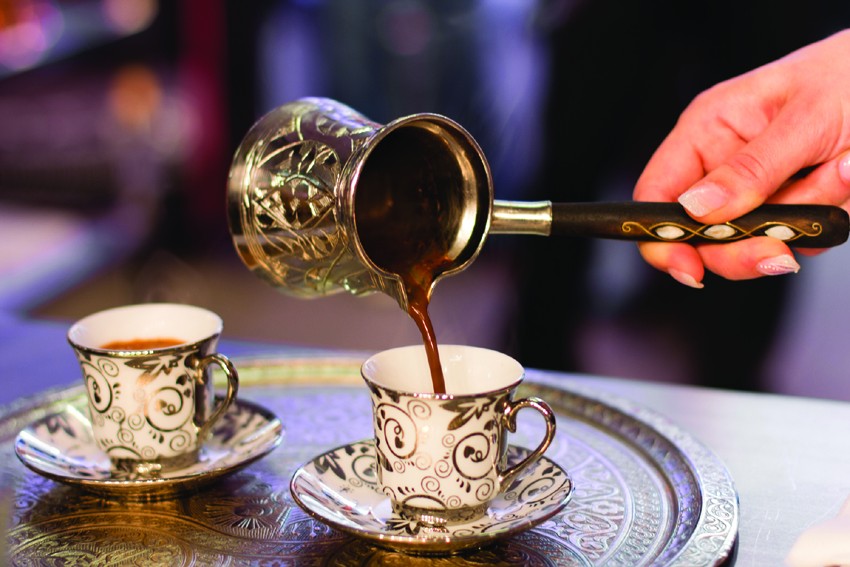
How is Turkish coffee made?
Weixin Official Accounts cafe_style In the 6th and 7th centuries, the Gaila people in Ethiopia began chewing coffee fruits and boiled grass leaves; in the 9th century, Persians boiled coffee fruits and used juice as medicine; by the mid-15th century, Yemen began to roast coffee beans inside the fruit and grind them together with the pulp before cooking

Introduction to the flavor and taste of Ted Manor in Sidamo Coffee producing area
Portugal and the Ottoman Empire invaded one after another in the 16th century. British troops invaded Ethiopia in 1867 and Sudanese Mahdi troops invaded in 1887. In 1889, Mennelik II became emperor, unified the country, established the capital Addis Ababa, and established the territory of modern Ethiopia. In 1890, Italy invaded, squeezed out British power and declared Ethiopia a sanctuary. 1896

Turkish pot Cezve Turkish pot is one of the few or even the only choice for brewing.
Abstract: when coffee circulated in the Arab world and even in early Europe, Turkish pots were few or even the only choice for brewing. If I asked which coffee utensils were the most important, I would probably answer: Turkish pots were one of the few or only brewing options when coffee circulated in the Arab world and even in early Europe.

Which is the correct description of Sumatran coffee?
Which is the correct description of Sumatran coffee? In ancient times, Arabs first dried and boiled coffee beans and drank the juice as stomach medicine, thinking that it could help digestion. Later, it was found that coffee also had a refreshing effect, and because Muslims strictly prohibited drinking, coffee was used instead of alcoholic beverages as a refreshing drink. After the fifteenth century, to

The unique and mellow taste of Cedar Motad Manor Coffee is introduced.
Ethiopia is an ancient country with a history of 3000 years of civilization. The Hamite people who immigrated from the southern Arabian Peninsula were the earliest inhabitants. Monlinique I reigned in 975 BC. The Kingdom of Nubia was established in the 8th century BC. From the 1st century to 976 AD, the Ethiopian Empire, also known as the Kingdom of Aksum, was established in Aksum in the north. Christianity was introduced into Ethiopia in the 4th and 5th centuries.

Introduction to the characteristics of Yega Sheffivoka Coffee Flavor Manor in Ethiopia
Yejia Chuefeiwoca [sun Yega Chuefei]: it is recommended to use 15 grams of powder 89 degrees water temperature, small Fuji grind degree 4 pearl V60 filter cup, water powder ratio 1:15, the first water injection 30g, stew 25s, the second water injection 104g water cut off, the second water injection to 230g water, the end of the water, extraction time is about 215g powder 92 degrees water temperature, water is recommended.

Which is the correct description of Sumatran coffee?
Which is the correct description of Sumatran coffee? In ancient times, Arabs first dried and boiled coffee beans and drank the juice as stomach medicine, thinking that it could help digestion. Later, it was found that coffee also had a refreshing effect, and because Muslims strictly prohibited drinking, coffee was used instead of alcoholic beverages as a refreshing drink. After the fifteenth century, to

Rich texture of the sun Yega Shifeiwaka coffee flavor taste manor area introduction
Portugal and the Ottoman Empire invaded one after another in the 16th century. British troops invaded Ethiopia in 1867 and Sudanese Mahdi troops invaded in 1887. In 1889, Mennelik II became emperor, unified the country, established the capital Addis Ababa, and established the territory of modern Ethiopia. In 1890, Italy invaded, squeezed out British power and declared Ethiopia a sanctuary. 1896

The Cultural Origin of Coffee how to use semi-automatic Coffee Machine
This is a romantic story. Gabriel, a French naval officer on the island of Matinique, circa 1720 or 1723. Mathieu. De. As he was about to leave Paris, Klee managed to get some coffee trees and decided to take them back to Martinique. He had been taking good care of the saplings and kept them in a glass box on the deck.

Why do some people like coffee? why do some people not like coffee?
In ancient China, Shennong tasted all kinds of herbs and recorded them one by one, so that later generations could have a systematic understanding of many plants. There is no such person as Shennong in the western world, let alone any written record, so there are different legends about the origin of coffee. Among them, the most common and popular story is the story of the shepherd. The Arabs in ancient times were the first to put coffee
Turkish coffee
Although Turkish coffee was first introduced from Yemen, Turkey was the first nation to secularize coffee drinks. When Turkish Ottoman soldiers fought in Europe, they left behind several sacks of coffee. Europeans originally thought it was camel feed. Later, they found that these small beans were refreshing agents for Turkish soldiers and tasted good. Therefore, western countries became addicted to coffee.

Jasmine-scented Ethiopian Sun Yega Sheffivoka Coffee Flavor Manor
Ethiopia is an ancient country with a history of 3000 years of civilization. The Hamite people who immigrated from the southern Arabian Peninsula were the earliest inhabitants. Monlinique I reigned in 975 BC. The Kingdom of Nubia was established in the 8th century BC. From the 1st century to 976 AD, the Ethiopian Empire, also known as the Kingdom of Aksum, was established in Aksum in the north. Christianity was introduced into Ethiopia in the 4th and 5th centuries.